
BIOGRAPHY
From a little town in Italy to global impact — built on work ethic, punk instinct, visual identity, and controlled chaos.
Every act of creation begins with an act of destruction.
Every act of creation begins with an act of destruction.

Bassano del Grappa. Northern Italy. Pretty mountains, old buildings, respectable people, and enough silence to make a young man suspicious. This is where Sir Bob Cornelius Rifo grew up. The “Sir” was self-appointed. No palace, no medal, no sword on the shoulder. Bob simply decided that Bob Rifo needed a little more authority. To be fair, it worked.
This was not London, New York, or somewhere people introduced themselves as “creatives” before they had created anything. Bassano was simpler. You worked. You fixed what was broken. You kept your head down and got on with it. Dreams were allowed, technically, but nobody was going to clap because you had one. Bob understood that early. He also understood that there are two ways to survive a small town: become exactly what it expects, or build a louder exit. He chose the exit.
Before the mask, the festivals, the records, the airports and the occasional piece of expensive equipment meeting a violent end, there was work. Real work. Routine, responsibility, factories, offices, deadlines, people expecting things from you and showing very little interest in your inner journey. Useful training, as it turned out, because the music business is mostly chaos wearing expensive shoes, and someone still has to finish the job.
Bob had another education running alongside it: punk records, comics, street culture, nightclubs, anti-heroes, Italian subculture, people who dressed badly with enormous confidence and people who dressed brilliantly and behaved even worse. Then came Frigidaire, Andrea Pazienza, Stefano Tamburini, Tanino Liberatore and Ranxerox. Not exactly bedtime reading. Those worlds showed him that beauty did not need to be clean, violence could have design, and a character, handled properly, could become more honest than the person behind it.
Which brings us to the mask. People like to overthink masks. They ask what it represents, what it hides, whether it means rebellion, anonymity, protection, mythology or trauma. The answer is probably yes. The practical answer is simpler: the face was getting in the way. So Bob removed it.
In 2005, The Bloody Beetroots began. The idea was to take everything that should not have worked together and force it into the same room: punk, electronic music, classical structure, distortion, melody, club pressure, comic-book violence and the kind of rhythm that makes sensible people spill their drinks. It started as a DJ set. Officially. In practice, it behaved more like a burglary. The records came in fast, hit hard and left the room in worse condition than they found it. There was a DJ booth, but nobody involved seemed particularly interested in staying behind it.

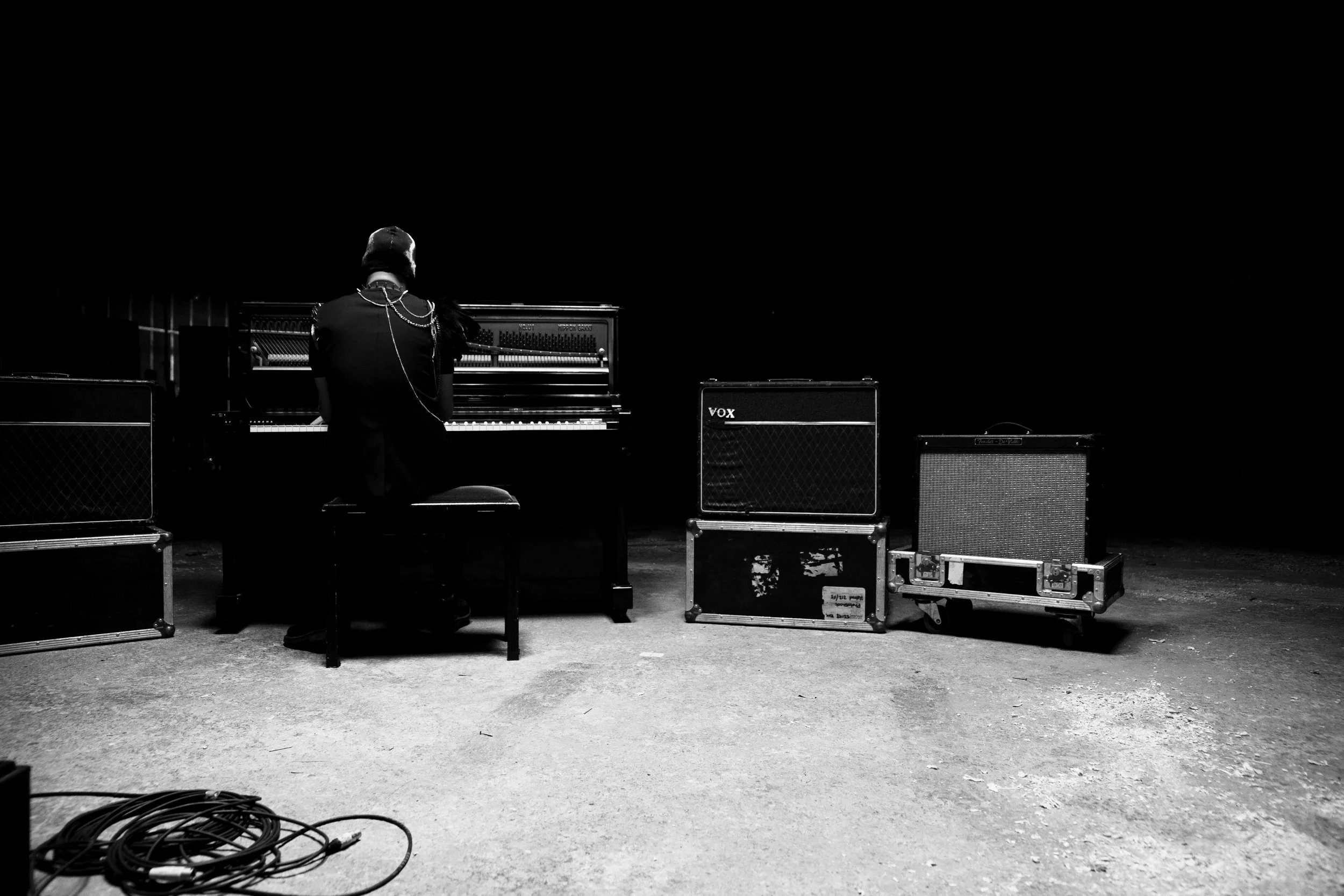
At the beginning, Tommy Tea was part of the dj setup and helped take the first version of the project onto the road. A useful role. But the writing, production, image and direction came from Bob. The Bloody Beetroots was his machine. Tommy helped push it. Bob had built the engine, and the engine was not known for moderation.
The early music travelled quickly through clubs, blogs, burned CDs, unofficial remixes and the more lawless corners of the internet. This was before every release required a twelve-week content strategy and a person in a meeting asking whether the distortion could feel more aspirational. Tracks escaped on their own. People played them. Other people complained. Both helped. Then came Rombo, Cornelius and Warp 1.9. At that point, subtlety was no longer a realistic option.
The project moved from small rooms into larger ones, then into tents, festivals, television, films, advertising, video games and eventually places where the backstage catering had ingredients written in several languages. Success had arrived. Unfortunately, success also brought expectations, and expectations are where most interesting things go to die. So Bob did the reasonable thing. He made everything more complicated.
In 2010, The Bloody Beetroots became The Bloody Beetroots Death Crew 77, a full live band with drums, guitars, amplifiers, cables, crew, transport costs and enough logistical problems to make any responsible manager feel physically unwell. It was slower to move, harder to control and significantly more expensive. Naturally, it sounded better. The live band gave the music a body. Not a polite one. A body that sweated, jumped, broke things and occasionally looked as though it might require medical assistance before the encore.
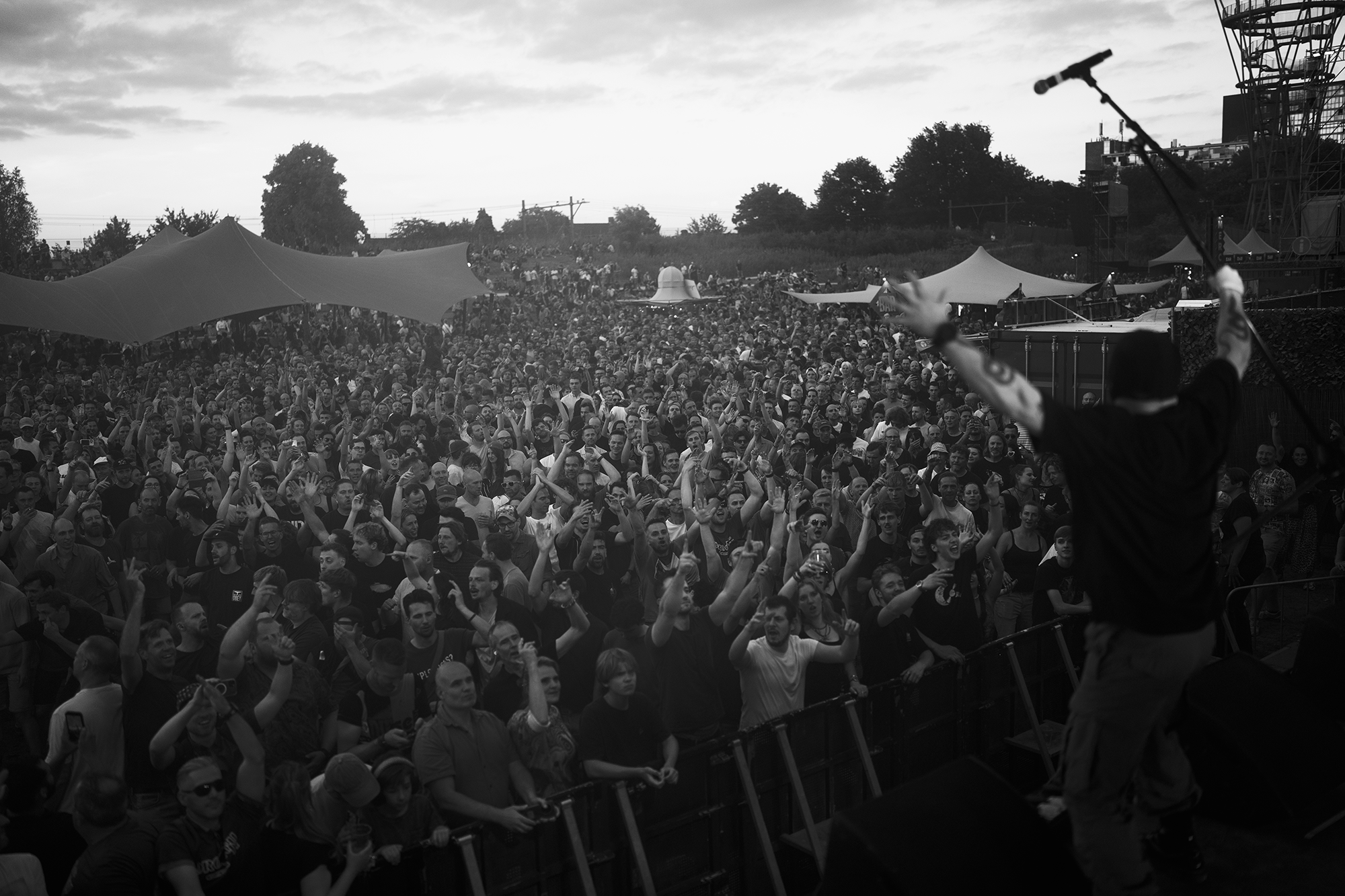
The DJ set remained. It had to. The Bloody Beetroots now had two forms. One could enter a club, detonate and leave. The other arrived with flight cases, drums, guitars and a small army of people asking where the nearest power supply was. Different methods. Same damage.
As the stages got bigger, the project somehow avoided becoming respectable. That is more difficult than it sounds. Most things lose something when they scale up: their accent, their danger, their reason for existing. The Bloody Beetroots kept all three. The music changed because Bob changed. Sometimes it moved deeper into punk, sometimes into electronics, sometimes into songwriting, rap, metal, orchestration or whatever else was required to keep the machine from repeating itself. There was no clean genre strategy. There was barely a clean room.
Then came the collaborators: Steve Aoki, Paul McCartney, Tommy Lee, Jet, Tom Morello, Perry Farrell, Refused, Bob Vylan and a long list of people who, under normal circumstances, might never have ended up on the same record. Normal circumstances were never part of the business model. Some brought melody, some history, some guitars, some trouble. A few brought all four.
The point was never to collect famous names and arrange them like trophies in a hallway. The interesting part was what happened when those people entered Bob’s world and the doors locked behind them. Sometimes the result was elegant. Sometimes it was violent. Usually it was loud enough to prevent further questions.
Behind all that noise was a fairly strict method. Bob had grown up with work, and work stayed at the centre of the project. The mask, the stage, the artwork, the photography, the clothes, the videos, the archives and the side projects were not there to fill space. They belonged to the same world. This is the part people miss when they reduce The Bloody Beetroots to a mask and one very loud record. The project was never just music. It was a way of building an identity without having to explain it politely.
Bassano del Grappa remained home. Los Angeles became the other side of the operation. Italy provided the bones: craft, discipline, contradiction, style, Catholic guilt, good food and a historic inability to leave well enough alone. California provided scale: speed, possibility, ambition, traffic and people describing disasters as “interesting opportunities.” Bob moved between the two. Bassano to build. Los Angeles to expand. Then back again to repair whatever the expansion had broken.
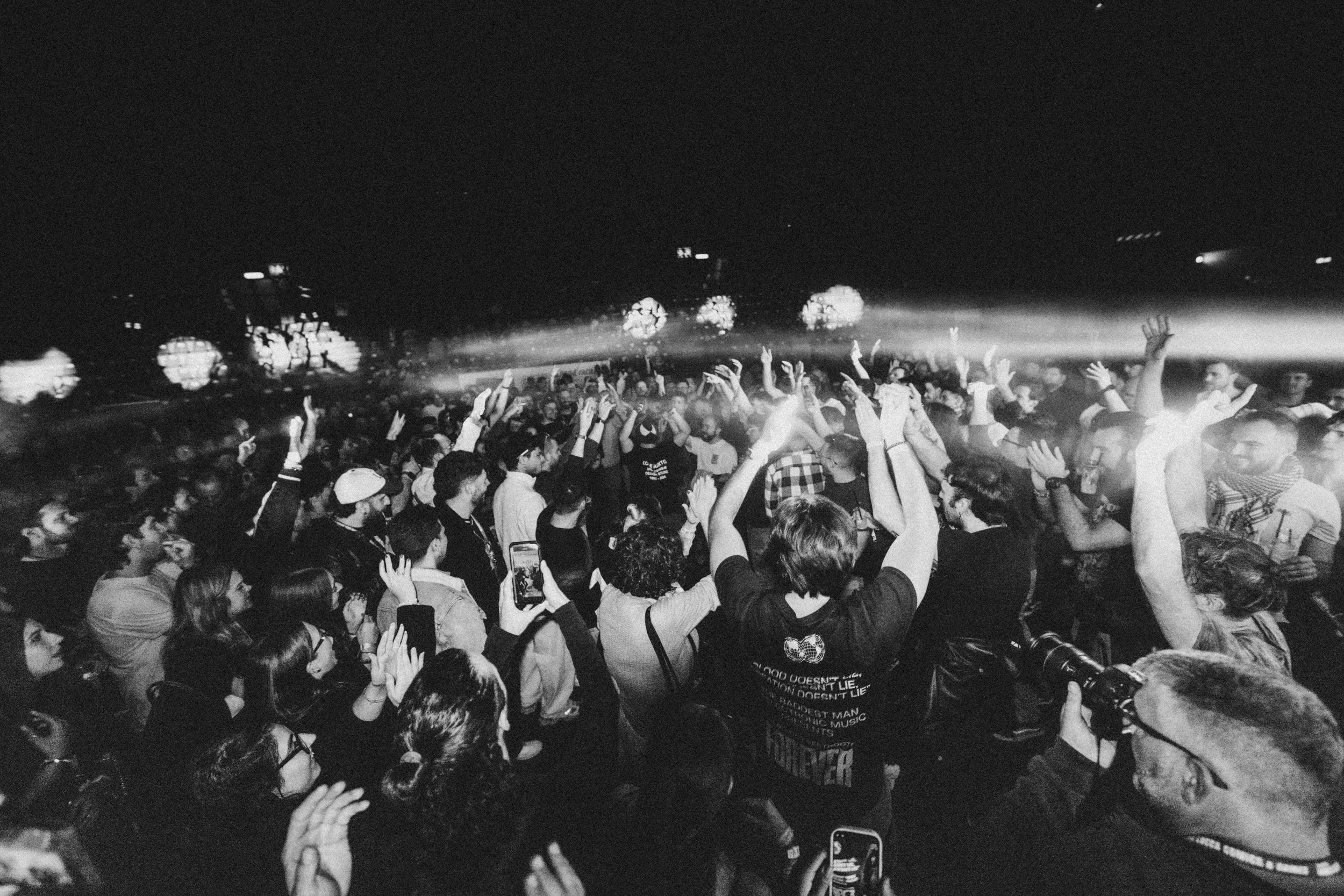
The Bloody Beetroots survived all of it. Not gracefully. Gracefully would have been suspicious. The project survived by changing shape without changing its nerve. That nerve is still there in the records, the live shows, the mask and the people who first heard the music in a dirty club and now bring their children to the festival.
Time has passed. The volume has not improved. Sir Bob Cornelius Rifo is still moving between discipline and instinct, Bassano and Los Angeles, construction and destruction. Still making records. Still building shows. Still refusing to become easy to explain.
There was also Penny Rimbaud. Co-founder of Crass. Writer. Artist. Thinker. The sort of person whose presence makes most modern conversations about rebellion feel slightly embarrassing. Penny became an important figure in Bob’s life, not as a name to mention for credibility. Punk has enough people doing that already. He became a compass. A reminder that rebellion without thought becomes performance, that anger without discipline burns quickly and leaves very little behind, and that silence, used properly, can be louder than most people with an amplifier.
This mattered because, from the outside, The Bloody Beetroots looked like pure impact: the mask, the noise, the bodies, the stage, the machinery. Underneath all of it was control. Not perfect control. That would have ruined the fun. Enough control to turn chaos into form. Enough discipline to keep going after trends changed, scenes collapsed, formats died, platforms arrived, platforms disappeared and the music industry invented several new ways to pay artists less money.
Twenty years later, The Bloody Beetroots remains what it was at the beginning: a loud exit from a quiet town. Only now the exit has travelled around the world, damaged several stages, collaborated with a Beatle and developed a considerably more complicated tax situation. Against the odds, the machine is still running. Someone should probably keep an eye on it.